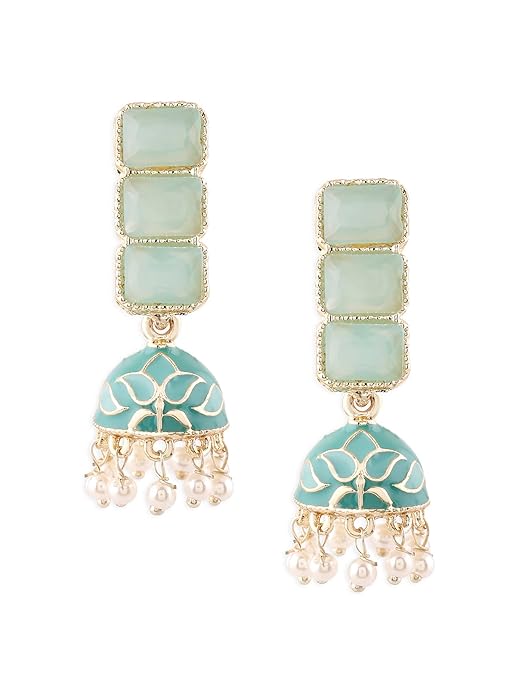
The festive season is here! Are you ready to flaunt a little sparkle this festive season? We have got you covered with our must-have earrings for this season! It’s the time to stock up gorgeous fashion jewellery for your ethnic outfits and avoid any last minute fashion-hassle
“ZENEME Rhodium Plated Silver Toned White American Diamond cross pendant necklace With Earring” has been added to your cart. View cart
Description
Zaveri Pearls Mint Green Meenakari Jhumkas: A Symphony of Heritage in Miniature light green crystal
In the vast and glittering constellation of Indian jewelry, few forms are as instantly recognizable, as deeply cherished, and as eternally resonant as the jhumka. It is an form that has danced on the ears of queens and commoners for centuries, a timeless silhouette that whispers of ancient bazaars and royal courts. The Zaveri Pearls Mint Green Meenakari Jhumka Earrings are not merely an accessory; they are a microcosm of India’s artistic heritage light green crystal.
They represent a conscious distillation of grandeur into a delicate, wearable scale, blending the opulence of 22K yellow gold plating with the exquisite artistry of meenakari work in a refreshing mint green hue. This exhaustive exploration will delve into the very soul of these earrings, from the historical weight of the jhumka form and the lost-wax magic of meenakari to the psychology of their scale and their role in the modern sartorial narrative light green crystal.
Part 1: The Form Divine – The Jhumka’s Eternal Resonance
The description begins with a powerful and undeniable truth: “Jhumka earrings are a timeless jewellery ornament which never goes out of fashion or trend.” This is not a marketing platitude; it is a historical fact.
Anatomy of an Icon:
A jhumka is characterized by its distinct bell-shaped dome. Traditionally, it consists of two primary parts:
-
The Dome (Kasa): The main, rounded body, often heavily embellished.
-
The Edging (Jhalar): The fringe or danglers that hang from the rim of the dome, providing movement and a cascading effect.
This design is acoustically and visually kinetic. Historically, the jhumka was often a hollow dome containing a small pellet or bell, designed to create a soft, melodic sound with the wearer’s every movement—a truly enchanting form of personal adornment that engaged multiple senses light green crystal.
A Journey Through Time:
The jhumka’s origins are ancient, with references and archaeological findings tracing it back to the Indus Valley Civilization and its depictions in classical Indian temple sculptures. It has been a staple across the subcontinent, known by various names—jhumki, balis, etc.—and has evolved through every era:
-
Mughal Opulence: The Mughals elevated the jhumka to new heights of grandeur, crafting them from precious gold and embedding them with uncut diamonds, emeralds, rubies, and pearls. They became a symbol of imperial wealth and refined taste light green crystal.
-
Regional Variations: Across India, the jhumka took on unique regional identities—the intricate temple jhumkas of South India, the vibrant enameled ones of Rajasthan, the delicate filigree versions from Orissa light green crystal.
-
Bollywood’s Embrace: In modern times, Hindi cinema has been instrumental in perpetually reintroducing the jhumka to every new generation. From the classic songs of the 60s and 70s to the contemporary fashion statements of today’s actresses, the jhumka has remained a constant symbol of Indian beauty and grace light green crystal.
Zaveri Pearls, by offering this style, is not just selling an earring; it is offering a piece of this living history, a wearable heirloom that connects the wearer to an unbroken chain of elegance light green crystal.
They represent a specific, intelligent vision of Indian elegance—one that is conscious of its past but not burdened by it, one that chooses refinement over ostentation, and one that finds beauty in the minute details. To wear them is to wear a story of artisan skill, historical continuity, and modern taste. They are not just the “best catch”; they are a quiet, sophisticated, and enduring testament to the fact that the most powerful statements are often made in a whisper light green crystal.
Part 2: The Palette of Paradise – Decoding Mint Green and 22K Gold
The color choice for these jhumkas is particularly intriguing and modern: “Colour: Mint Green, Plating: 22K Yellow Gold.” This is a sophisticated and deliberate color story.
The Regal Warmth of 22K Yellow Gold Plating:
Gold plating is the art of applying a thin layer of gold onto a base metal. “22K” specifies the purity of the gold used in this plating layer. Karatage measures the purity of gold on a scale of 24, with 24K being 100% pure gold light green crystal.
-
24K Gold: Pure but too soft for jewelry, easily scratched and bent.
-
22K Gold (91.7% pure gold): This is the gold of Indian heritage. It has a rich, deep, and warm yellow hue that is immediately associated with traditional Indian jewelry. It is the gold of mangalsutras, of temple jewelry, of royal treasures. By choosing 22K yellow gold plating, Zaveri Pearls imbues these earrings with that specific, culturally resonant warmth and a perception of high value and authenticity. It provides a glorious, regal foundation for the artistry to come light green crystal.
The Serene Modernity of Mint Green:
Mint green is a pale, soothing tint of green, named after the mint plant. Its use in meenakari is a departure from the more classic primary colors (red, blue, white) and speaks to a contemporary sensibility.
-
Psychological Impact: Green is the color of nature, harmony, freshness, and renewal. Mint green, specifically, evokes feelings of tranquility, sophistication, and cool elegance. It is refreshing and modern.
-
Symbolism: In the context of Indian jewelry, green is often associated with the emerald, a stone linked to the planet Mercury (Budh) and believed to bring intelligence, communication, and growth.
-
Aesthetic Brilliance: The choice is masterful. The cool, soft mint green provides a stunning visual contrast against the warm, vibrant 22K gold base. The gold wires (wires) that form the outlines of the meenakari design will shine brightly against this muted green background, making the intricate patterns pop with clarity and definition. It is a color scheme that is simultaneously traditional (in its technique) and utterly modern (in its palette) light green crystal.
- They represent a specific, intelligent vision of Indian elegance—one that is conscious of its past but not burdened by it, one that chooses refinement over ostentation, and one that finds beauty in the minute details. To wear them is to wear a story of artisan skill, historical continuity, and modern taste. They are not just the “best catch”; they are a quiet, sophisticated, and enduring testament to the fact that the most powerful statements are often made in a whisper light green crystal.
Part 3: The Artisan’s Breath – The Magic of Meenakari
The description highlights that these are “meenakari earrings” that are “vibrant and elegant.” Meenakari is not a mere coloring technique; it is one of India’s most revered and complex art forms.
The Process: A Dance of Fire and Skill:
Meenakari, or enameling, is the process of fusing powdered colored glass to a metal surface under extremely high heat. The term itself is derived from Mina, the Persian word for the azure-blue enamel of heaven. The art form was brought to India by Mughal artisans and found a glorious home in Rajasthan, particularly in Jaipur light green crystal.
The process for creating a piece like these jhumkas is meticulous:
-
The Base: The alloy base is first plated with 22K gold, providing a pristine surface.
-
Engraving (Khundnai): A master craftsman (naqshaban) uses fine tools to engrave the intricate design—likely floral motifs (phool-patti), paisleys (kairi), or geometric patterns—into the metal. This carving creates tiny cloisons (cells) that will hold the enamel.
-
Enamel Application: The meenakar (enameler) fills these engraved cells with different colored enamel powders, each color applied and fired separately. The order of application is crucial, starting with colors that require the highest melting point (like red) and moving to those with lower melting points (like white and green) light green crystal.
-
Firing: The piece is placed in a kiln at temperatures around 750-850°C. The powder melts, liquefies, and fuses to the metal, transforming into a hard, glossy, vitreous coating.
-
Polishing: After all colors are fired, the piece is polished with a mixture of lemon and tamarind to bring out a brilliant shine, revealing the gleaming gold outlines and the vibrant, smooth enamel within light green crystal.
The “vibrant and elegant” quality is the direct result of this painstaking, artisan-driven process. The vibrancy comes from the pure, glass-like intensity of the fused enamel colors. The elegance arises from the precision of the engraved patterns and the harmonious contrast between the colored fields and the gleaming gold lines light green crystal.
They represent a specific, intelligent vision of Indian elegance—one that is conscious of its past but not burdened by it, one that chooses refinement over ostentation, and one that finds beauty in the minute details. To wear them is to wear a story of artisan skill, historical continuity, and modern taste. They are not just the “best catch”; they are a quiet, sophisticated, and enduring testament to the fact that the most powerful statements are often made in a whisper light green crystal.
Part 4: The Philosophy of Scale – The Power of the “Tiny Jhumki”
In a world of statement jewelry, Zaveri Pearls makes a compelling case for subtlety with the declaration: “This Tiny Jhumki Is The Best Catch.” The dimensions confirm this: “Earring Length-4.2 cm, Product Weight-10 Grams.”
The Psychology of Delicacy:
A 4.2 cm (approximately 1.65 inches) jhumka is indeed on the smaller, more delicate side. This scale is not a compromise; it is a strategic design choice with distinct advantages:
-
Everyday Elegance: Their lightweight nature (a mere 10 grams for the pair) and modest size make them incredibly versatile. They are not just for grand festivals; they can be worn to the office, a lunch outing, or a casual gathering, adding a touch of traditional elegance without feeling overdressed light green crystal.
-
Focus on Craft: The smaller scale often necessitates even greater precision in the meenakari work. The patterns become finer, more intricate, inviting closer appreciation. It speaks of refined taste—an understanding that impact is not solely derived from size, but from the quality and detail of the craftsmanship.
-
Universal Appeal: Their delicacy makes them universally flattering. They complement all face shapes and ages, from a young woman’s first traditional earrings to a mature woman’s signature everyday piece light green crystal.
-
Modern Sensibility: The “tiny jhumki” trend aligns perfectly with contemporary fashion’s move towards dainty, layered, and mixable jewelry. It allows the wearer to potentially layer them with smaller studs or other delicate hoops for a personalized look.
Calling it the “best catch” positions these earrings as the perfect entry point into the world of traditional jewelry—accessible, wearable, and utterly charming.
They represent a specific, intelligent vision of Indian elegance—one that is conscious of its past but not burdened by it, one that chooses refinement over ostentation, and one that finds beauty in the minute details. To wear them is to wear a story of artisan skill, historical continuity, and modern taste. They are not just the “best catch”; they are a quiet, sophisticated, and enduring testament to the fact that the most powerful statements are often made in a whisper light green crystal.
Part 5: The Stylist’s Canvas – Curating the “Stunning Festive Look”
The description provides clear stylistic guidance: “For stunning festive look you can pair these with a silk saree, an anarkali suit or even a simple kurta with a dupatta. completely. The key is to let your jhumkas garner all the attention.”
This advice is rooted in the principles of effective styling:
1. The Suggested Pairings:
-
Silk Saree: The rich, luxurious texture of a silk saree (like a Banarasi, Kanjeevaram, or Mysore silk) provides a sumptuous backdrop. The modest size of the jhumkas would pair beautifully with a saree that might itself have intricate patterns, ensuring the look is balanced and not overly busy.
-
Anarkali Suit: The flowing, regal silhouette of an Anarkali is inherently dramatic. These delicate jhumkas would add a touch of traditional grace at the ear, framing the face beautifully against the volume of the outfit.
-
Simple Kurta with a Dupatta: This is perhaps the most modern and brilliant suggestion. It demonstrates the earrings’ power to elevate the simplest of outfits. A plain cotton or linen kurta is transformed from casual to “festive” by the addition of these intricately crafted earrings and a complementary dupatta. This is the essence of effortless Indian style.
- They represent a specific, intelligent vision of Indian elegance—one that is conscious of its past but not burdened by it, one that chooses refinement over ostentation, and one that finds beauty in the minute details. To wear them is to wear a story of artisan skill, historical continuity, and modern taste. They are not just the “best catch”; they are a quiet, sophisticated, and enduring testament to the fact that the most powerful statements are often made in a whisper light green crystal.
2. The Golden Rule: Let Them Shine:
The instruction to “let your jhumkas garner all the attention” is the key to this look. With jewelry of such intricate artistry, the outfit should play a supporting role.
-
Necklines: Opt for higher necklines or simple round necks. Avoid heavy necklaces that would compete for attention in the same visual space. A simple chain or a delicate pendant would suffice, or no necklace at all.
-
Hairstyling: The best way to showcase these earrings is to wear the hair pulled back—a sleek bun, a braid, or a ponytail. This clears the stage, ensuring the jhumkas are fully visible and can dance freely with every movement light green crystal.
-
Makeup: A neutral makeup look with a focus on glowing skin would keep the attention on the jewelry. Alternatively, a lip color that picks up a subtle hint from the mint green (perhaps a soft pink or a nude) could create a cohesive and sophisticated palette light green crystal.
- They represent a specific, intelligent vision of Indian elegance—one that is conscious of its past but not burdened by it, one that chooses refinement over ostentation, and one that finds beauty in the minute details. To wear them is to wear a story of artisan skill, historical continuity, and modern taste. They are not just the “best catch”; they are a quiet, sophisticated, and enduring testament to the fact that the most powerful statements are often made in a whisper light green crystal.
Part 6: The Covenant of Care – Preserving the Art
The care instructions, while standard, are a sacred covenant for preserving this miniature artwork: “Wipe your jewellery with a soft cloth after every use. Always store your jewellery in jewellery box to avoid accidental damage. Keep water, sprays and perfumes away from jewellery” light green crystal.
-
The Soft Cloth: This simple act removes the invisible enemies: skin oils, dust, and moisture. It is the single most effective practice for maintaining the plating’s shine and the enamel’s gloss.
-
The Jewelry Box: A dedicated storage space is a sanctuary. It protects the delicate meenakari from scratches, impacts, and exposure to air that can accelerate tarnishing of the underlying alloy.
-
The Forbidden Elements: Water, perfumes, and chemicals are the kryptonite to plated and enameled jewelry. They can cause the plating to wear off prematurely, cloud the brilliant finish of the enamel, and weaken the metal settings. The rule is absolute: adorn yourself last, and undress first light green crystal.
Conclusion: A Legacy on Your Ears
The Zaveri Pearls Mint Green Meenakari Jhumka Earrings are a masterclass in balanced design. They are a confluence of:
-
Heritage: Through the timeless jhumka form and the ancient art of meenakari.
-
Modernity: Through the contemporary mint green color and the deliberately delicate scale.
-
Craftsmanship: Through the intricate, fire-forged artistry of the enamel work.
-
Versatility: Through their ability to move from a simple kurta to a grand silk saree.
They represent a specific, intelligent vision of Indian elegance—one that is conscious of its past but not burdened by it, one that chooses refinement over ostentation, and one that finds beauty in the minute details. To wear them is to wear a story of artisan skill, historical continuity, and modern taste. They are not just the “best catch”; they are a quiet, sophisticated, and enduring testament to the fact that the most powerful statements are often made in a whisper light green crystal.
Be the first to review “Zaveri Pearls Mint Green Enamel Ethnic Style Jhumki Earring For Women-ZPFK16526” Cancel reply
Related products
-
Sale!
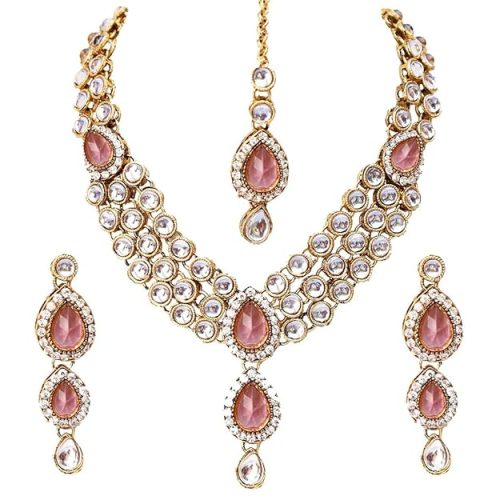
Shining Diva Latest Stylish 18k Gold Plated Traditional Kundan Necklace Jewellery Set for Women
₹2,499.00Original price was: ₹2,499.00.₹350.00Current price is: ₹350.00. -
Sale!
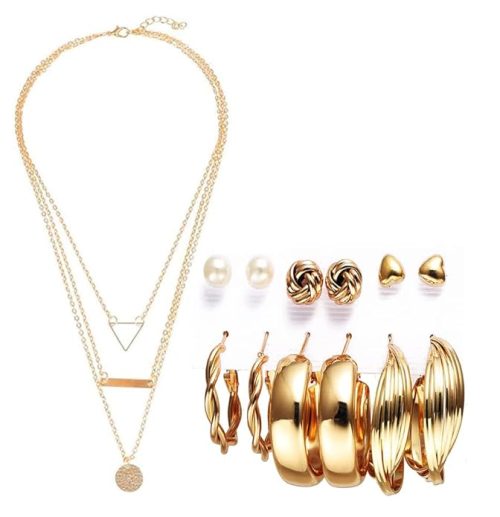
YouBella Fashion Jewellery Gold Plated Necklace and Earrings Combo Jewellery Set for Girls and Women (Gold)
₹1,599.00Original price was: ₹1,599.00.₹266.00Current price is: ₹266.00. -
Sale!
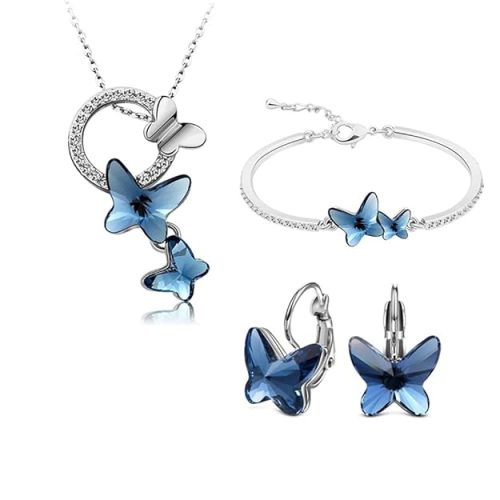
Shining Diva Fashion Italian Designer Platinum Plated Crystal Butterfly Earrings Chain Pendant Necklace Combo Jewellery Set for Women and Girls (Blue) (14603s)
₹2,995.00Original price was: ₹2,995.00.₹441.00Current price is: ₹441.00.
Reviews
There are no reviews yet.